Foreign National Hard Money Loans in Houston
July 1, 2026
> YMYL Disclaimer: This article is for informational purposes only and does not constitute financial, legal, or investment advice. Loan terms, rates, and regulations change frequently. Consult a licensed financial or legal professional before making any borrowing decision.
Lenders financing a flip in The Heights underwrite it differently than one in Pasadena—and that gap can change your rate, your available capital, and your timeline. Houston's submarkets produce different ARV support, different buyer demand, and different comparable sales density. A lender working from metro-wide assumptions is not underwriting your deal. They're approximating it. That approximation sometimes kills otherwise fundable projects. Understanding how Houston's submarket structure drives hard money decisions—not just which lenders exist—is the starting point for any serious comparison.
Local Overview
Houston's real estate investment landscape separates sharply along submarket lines. Urban-core corridors like The Heights, Montrose, and Midtown generate dense comparable sales and strong buyer demand. Outer markets like Pasadena, Aldine, and Humble operate under different absorption rates and resale dynamics.
Hard money lenders assess collateral at the neighborhood level. A firm without granular submarket data will apply conservative valuation assumptions—reducing your available capital even when your comps are solid. Both locally branded firms and national private lenders actively target Houston investors. Ask any provider specifically which neighborhoods they've financed recently. That answer tells you more than their area code does.
Who Uses Hard Money Loans
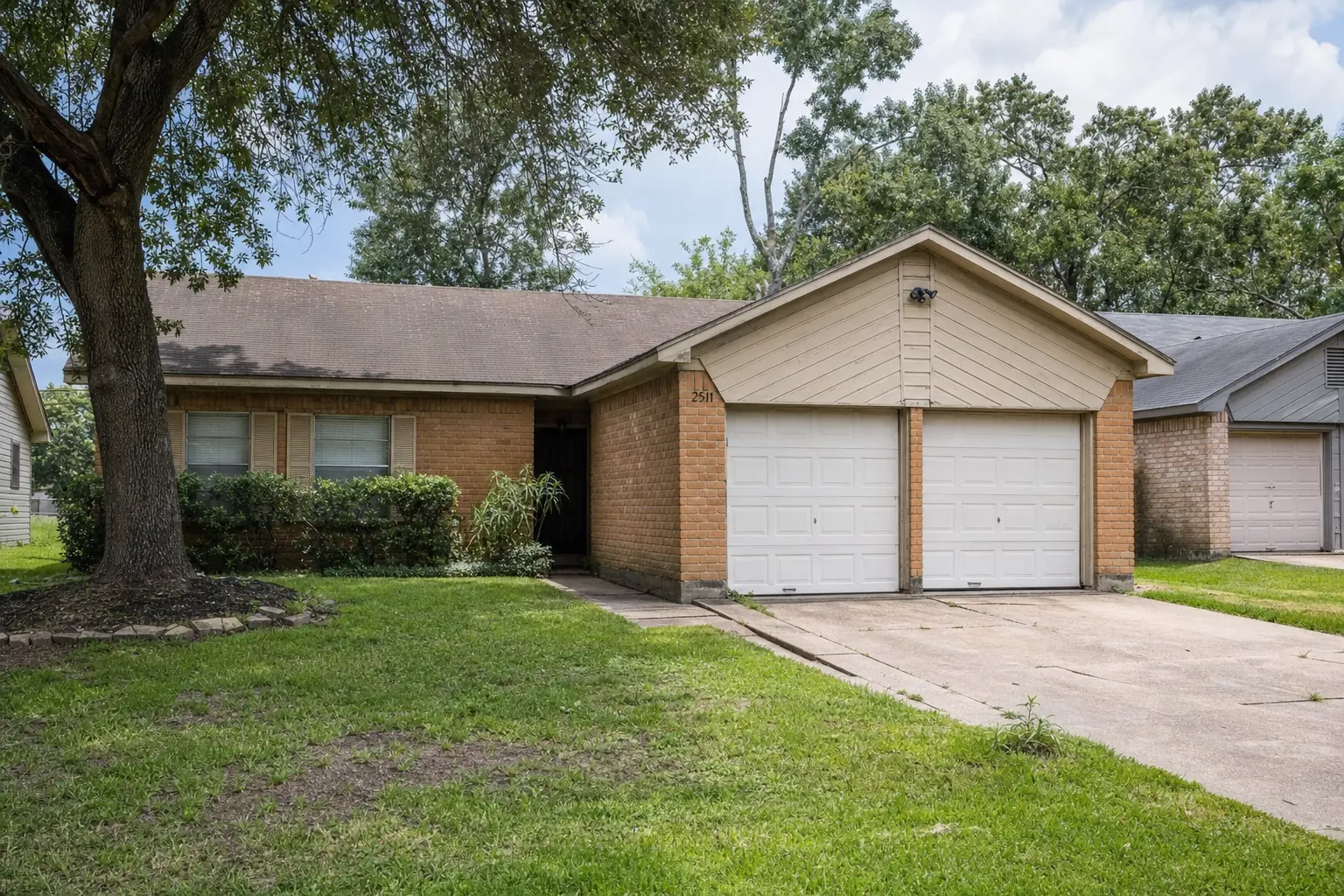
Fix-and-flip investors represent the largest share of Houston hard money borrowers. The typical pattern is straightforward: acquire a distressed single-family house, renovate it, and resell within months. Lenders structure these loans around rehab scope, ARV support, and resale timeline rather than borrower income.
BRRRR investors use hard money differently. They acquire and renovate a distressed property, then refinance into longer-term debt once the asset is stabilized and tenanted. The hard money loan is a bridge, not a permanent solution. Execution risk is higher because the exit depends on qualifying for a conventional or DSCR refinance after renovation.
New construction borrowers are a distinct segment. Houston's permitting activity and lot availability in inner-loop and near-loop neighborhoods support ground-up projects. These borrowers need lenders comfortable with draw schedules, permit timelines, and construction cost verification—not just ARV math.
Duplex and small multi-unit buyers appear consistently in Houston investor activity. So does a smaller but active commercial and mixed-use segment. Out-of-area investors are also present, particularly around short-term rental questions. Remote buyers should verify current Houston STR regulations directly with the city before building any occupancy projection into a loan request.
Wholesale-to-retail investors represent a narrower use case. They contract properties below market, assign or close quickly, and sometimes use hard money to fund a simultaneous close. Speed is the primary requirement. Lenders who cannot move within days are not useful for this model.
What Hard Money Lenders Look For in Houston
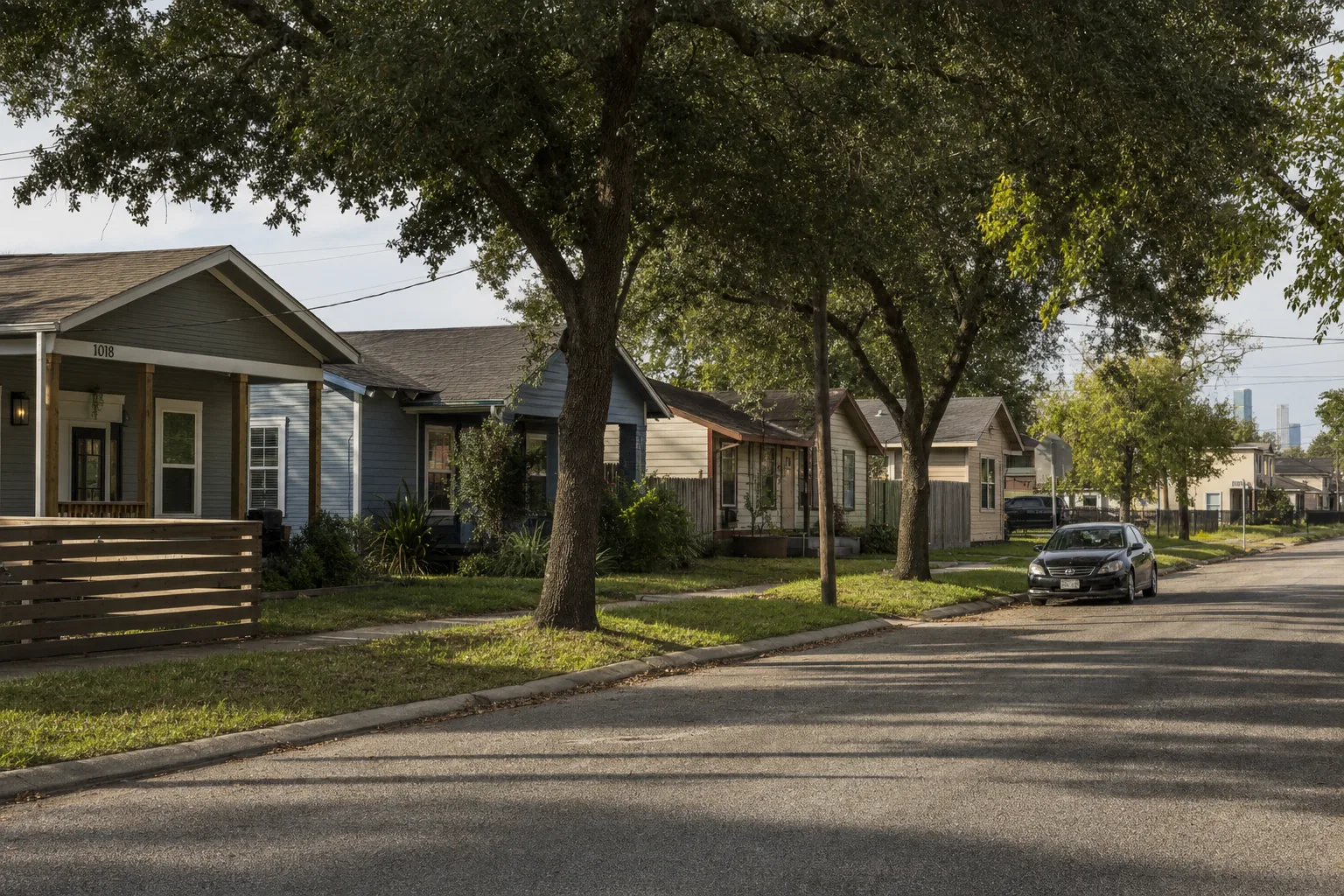
Collateral quality is the primary underwriting factor. Lenders in Houston assess after-repair value using neighborhood-level comparable sales. A deal that pencils at the metro level may not hold up under submarket scrutiny—especially in transitional areas where recent sales are sparse or inconsistent.
Beyond the property value, lenders review the scope of work. Construction loans require permit documentation and draw schedules tied to verified milestones. DSCR loans require rent comparables and occupancy assumptions. Fix-and-flip underwriting requires a credible exit timeline supported by active buyer demand. Presenting the wrong documentation package for your loan type slows approval and signals inexperience.
Liquidity matters more than credit score in most hard money decisions. Lenders want to see that you can cover carrying costs, unexpected overruns, and closing expenses without depending entirely on the loan. Liquid reserves are underwritten differently by each lender—ask specifically what they require and in what form.
Borrower experience affects leverage and pricing. A borrower closing their first flip will face different capital limits than one with a documented track record. Lenders use experience as a proxy for execution risk. First-time borrowers can offset that with stronger liquidity, a detailed scope of work, and a credible contractor relationship.
Rates, Points, and Loan Terms
Rates, points, loan-to-value limits, ARV limits, fees, and days-to-close are informational ranges only when sourced. They are not guarantees, quotes, commitments to lend, or financial advice. Actual terms vary by lender, borrower qualifications, property type, leverage, location, and underwriting review.
Hard money pricing in Houston reflects both the lender's cost of capital and their assessment of your specific deal risk. Interest rates vary based on property type, loan-to-value ratio, borrower experience, and submarket. For current benchmark ranges, see NerdWallet's hard money loan overview.
Points are origination fees expressed as a percentage of the loan amount. One point equals one percent. Most Houston hard money deals carry between one and four points at origination. Higher-risk deals, thinner ARV support, or first-time borrowers can push that figure higher. Points are negotiable in competitive situations, particularly for repeat borrowers with strong track records.
Loan terms typically run six to eighteen months. Extensions are available from most lenders but carry additional fees. Some lenders reprice the loan at extension; others charge a flat extension fee without rate adjustment. Knowing that structure before you sign protects your margin if renovation runs long.
Prepayment penalties are present in some Houston hard money agreements. If you plan to refinance or sell quickly, confirm whether a penalty applies and how it is calculated. A penalty that triggers at month three can eliminate margin on a fast flip.
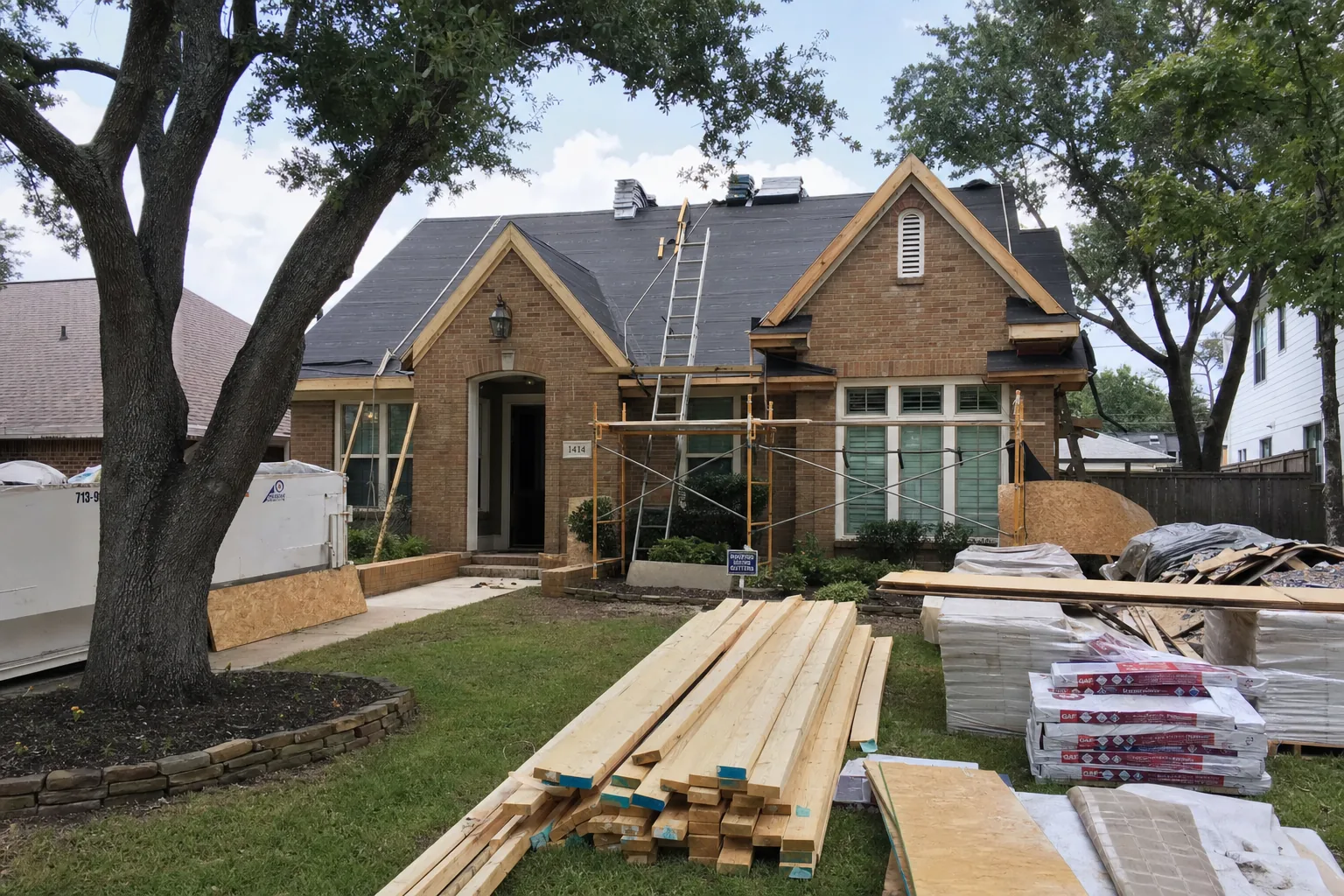
Draw schedules on construction and rehab loans affect your cash flow more than the interest rate does. Reimbursement-based draws require you to fund costs upfront. Advance-funded draws reduce that burden. Confirm which model applies before closing.
How to Verify a Lender
Not every entity calling itself a hard money lender in Houston operates under the same regulatory framework. Verification matters before you share financials or execute any agreement.
Some Houston hard money lenders carry an NMLS registration voluntarily. Others operate entirely outside that system. When a lender provides an NMLS number, confirm it is active and tied to the specific entity you're working with—not a parent company or affiliated brand name. Verify any number through NMLS Consumer Access before proceeding.
For residential mortgage activity on owner-occupied properties, the Texas Department of Savings and Mortgage Lending is the relevant state regulator. Review their public resources at Texas SML to understand which activities require licensing in Texas. Business-purpose loans on non-owner-occupied investment properties fall outside residential mortgage licensing definitions under Texas statute. If there is any ambiguity about how your loan is classified, ask the lender directly and get the answer in writing.
References matter. Ask for contact information for two or three borrowers who closed deals in Houston within the last twelve months. A lender unwilling to provide references is telling you something. One who provides them and whose references confirm fast draws and accurate underwriting is demonstrating something a marketing page cannot.
Confirm the lender's funding source. Table-funded deals, broker arrangements, and direct lenders operate differently. Knowing who actually holds the note affects what happens if your project encounters problems mid-renovation.
Frequently Asked Questions
How does Houston's submarket structure affect my hard money loan terms?
Houston is not a single market. It is a collection of submarkets with distinct absorption rates, buyer demand profiles, and comparable sales density. A lender underwriting at the metro level will apply blended assumptions that may not reflect your specific neighborhood. That gap usually shows up as a lower ARV estimate, a reduced loan amount, or a higher rate to compensate for perceived uncertainty.
Inner-loop submarkets like The Heights, Montrose, and EaDo generate frequent comparable sales and strong buyer demand. Lenders familiar with these areas will underwrite with more confidence and may offer better leverage. Outer submarkets like Humble, Aldine, or parts of northeast Houston have thinner sales data. Lenders who lack experience in those areas will apply more conservative assumptions.
Before contacting any lender, pull your own comparable sales at the neighborhood level—not the zip code level. Understand the active buyer pool for your specific product type. Know whether days-on-market in your submarket support your projected resale timeline. A borrower who presents that data proactively signals competence. Lenders respond to competence with better terms. The submarket question is not academic—it directly affects your loan amount, your rate, and whether your deal funds at all.
What should I ask a Houston hard money lender before submitting a full application?
Start with how they underwrite rehab budgets. Do they accept your contractor bids, or do they run an independent cost estimate? If their internal figure comes in lower than yours, that gap reduces what they'll fund against construction costs. That difference needs to be resolved before closing, not after.
Ask whether construction disbursements are reimbursement-based or advance-funded, and how many inspections are required per release. A lender with a slow disbursement process can stall your renovation even when closing was fast. That operational detail matters more than the rate on a tight timeline.
Ask what happens if your project runs long. Extension terms vary widely—flat fees, repriced loans, or renegotiated conditions. Knowing that structure before you sign is not optional.
Ask which Houston submarkets they've actively closed deals in recently. General Texas lending experience is not the same as submarket familiarity. Finally, for any lender presenting an NMLS number, verify it through NMLS Consumer Access before sharing financials or executing any agreement. A lender who answers all of these questions directly and accurately is demonstrating something a marketing page cannot.
Can an out-of-state investor use a Houston hard money lender effectively?
Yes, but the operational requirements are different from a local borrower. You need a reliable local presence—a contractor, a project manager, or both—before any competent lender will take your deal seriously. Remote management of a Houston renovation without verified local support is a risk that most lenders will price in or decline outright.
Lenders will require a property inspection or valuation regardless of your location. For a fix-and-flip, construction disbursements are tied to verified milestones—not a single upfront release. Lenders want to understand your contractor arrangement and your plan for overseeing a renovation from a distance. Confirm that your lender has an established disbursement and inspection process for Texas properties. A national lender without reliable local vendor relationships can delay funded releases and compress your timeline significantly.
For STR-targeted acquisitions, verify current Houston regulations independently. Do not build loan repayment assumptions around occupancy projections that have not been stress-tested against the specific submarket. Rules vary, and projections that work in one area may not transfer to another. Out-of-state investors who arrive with verified local support, a realistic scope of work, and independently sourced comparable sales close deals. Those who rely on the lender to fill those gaps rarely get favorable terms.
Compare Your Next Steps
Identify your property's submarket before contacting any lender. That location determines which comparable sales apply and what leverage is realistic for your deal. Request quotes from at least two lenders who can confirm recent closings in your specific Houston neighborhood—not just general Texas experience. Ask each one how they handle rehab budget review and construction disbursements. Those operational details determine whether your project closes on time or stalls mid-renovation.
Additional resources: Houston providers, provider directory, comparison guide.