Bayport Funding
New York, NY
bridgecommercialdscrfix flip
- Trust Label
- Verified Business
- Reviews
- 3.2 composite
- States
- NY
- Close Time
- Ask lender
New York, NY
New York, NY
New York, NY
New York, NY
New York, NY
New York, NY
New York, NY
New York, NY
New York, NY
New York, NY
New York, NY
New York, NY
New York, NY
New York, NY
New York, NY
New York, NY
New York, NY
New York, NY
New York, NY
New York, NY
Manhattan's median sale price per square foot sits around $647, meaning a modest ARV miss on a renovation can erase tens of thousands in projected equity—and that math is not theoretical. At a citywide median near $876,000 per Redfin, a small percentage error against projected resale value produces an absolute dollar loss that would be minor in a lower-cost market, and New York does not forgive sloppy underwriting. Borrowers who treat exit assumptions casually—using citywide averages instead of borough-specific comps—absorb those losses directly. Hard money works here, but only when the deal structure accounts for what makes this market structurally different from most others.

New York City's five boroughs operate as separate sub-markets with separate price trajectories, permitting timelines, and buyer pools. A lender familiar with Brooklyn fix-and-flip exit timelines may not understand the co-op approval constraints that govern a Manhattan purchase. Borough-level expertise is not optional here. The speed that defines hard money's value proposition is only real if the lender can execute across New York's specific regulatory and procedural layers. Sponsors working across borough lines should verify that each prospective lender has recent closing experience in the specific borough being financed—not just the metro area broadly. The New York provider directory lists active lenders with local deal history.

Hard money fills the gap when conventional financing is too slow, too rigid, or structurally unavailable for the deal type.
Fix-and-flip investors are the most common borrowers. They acquire distressed or underpriced assets, renovate, and resell within a defined window. Bank timelines and seasoning requirements make conventional loans impractical. Hard money closes faster and structures around the renovation plan rather than current income.
Real estate developers use bridge financing to acquire sites before permanent construction debt is arranged. A shovel-ready project in Queens or the Bronx may need capital committed within days. Hard money provides that speed when the deal economics justify the cost.
Buy-and-hold investors sometimes use hard money to acquire and stabilize a property before refinancing into a longer-term debt structure. The hard money loan functions as a bridge. Once the property is stabilized and seasoned, the borrower exits into a DSCR loan or conventional financing.
Commercial property buyers face similar constraints when acquiring mixed-use buildings, retail, or multifamily assets that need repositioning. Traditional lenders require stabilized income. Hard money lenders underwrite the asset and the plan.
Estate and probate situations frequently generate time-sensitive acquisition opportunities. A property must be sold by a court deadline or family agreement. Conventional financing cannot close that fast. Hard money can.
Self-employed borrowers and those with complex income structures often cannot document income in the format conventional lenders require, even when the deal itself is sound. Hard money lenders focus on collateral and exit strategy, not W-2s. That structural difference opens access for borrowers who would otherwise be locked out.
Collateral quality is the foundation of every underwriting decision, but New York adds layers that do not apply in simpler markets.
Lenders evaluate loan-to-value against the as-is condition of the property, not the projected post-renovation price. In a market where a brownstone in Crown Heights and a co-op in Midtown carry entirely different risk profiles, that distinction matters. A lender pulling Brooklyn comps to underwrite a Manhattan co-op purchase is making an error. That error becomes your loss at exit.
Renovation scope documentation matters more here than in thinner markets. A lender needs an itemized budget—not a rough estimate—because cost overruns on a high-basis asset compress margin fast. Construction costs, permitting timelines, and contractor availability in New York differ from what applies elsewhere. A lender who has not closed deals in the specific borough being underwritten may underestimate those variables. Borrowers should ask prospective lenders for recent, borough-specific closing examples before treating their timeline assumptions as credible.
Exit strategy credibility carries significant weight. Lenders who understand this market push back on exits that rely on citywide averages rather than neighborhood-level comps. That pushback protects both parties. A lender who accepts a vague exit without scrutiny is not being flexible—they are not doing their job.
Borrower track record influences both approval and pricing. First-time borrowers may face lower leverage caps or higher rates. Demonstrated experience in comparable New York deals reduces perceived risk and often produces better terms.
Lenders commonly evaluate leverage against purchase price, current as-is value, rehab budget, and projected ARV as four separate checkpoints—not a single blended ratio.
Rates, points, loan-to-value limits, ARV limits, fees, and days-to-close are informational ranges only when sourced. They are not guarantees, quotes, commitments to lend, or financial advice. Actual terms vary by lender, borrower qualifications, property type, leverage, location, and underwriting review.
Hard money rates in New York reflect both the national hard money market and the cost structure of operating in a high-value, high-complexity metro. No rate range cited here constitutes a quote or a commitment to lend.
Origination points vary by lender, deal complexity, borrower experience, and loan size. A first-time fix-and-flip investor on a small outer-borough deal will see different pricing than an experienced developer closing a multi-unit project in Manhattan. Points and rate interact—a lender with a lower headline rate but punishing extension fees or a slow draw schedule may cost more than a lender whose rate looks higher on paper.
Draw schedules matter as much as rate on renovation deals. Funds are released in stages tied to completed work. A lender whose draw inspection process runs slowly adds real cost to the project. Ask specifically how long draw approvals take after inspection request, and get that answer in writing.
Extension fees are standard when projects run over the original loan term. An extension fee on a large New York loan balance compounds quickly. Total cost—not rate alone—is the comparison that matters. Direct lender comparison using the same deal parameters is the only reliable way to assess actual cost across multiple offers.
Leverage caps are typically structured against purchase price, current value, rehab budget, or ARV, and shift by property type and borrower track record. Extension and default provisions deserve the same scrutiny as the headline rate. No figure cited anywhere in this section constitutes a quote, a commitment to lend, or a guarantee of terms. Review the comparison guide before negotiating terms.
New York's hard money market includes experienced institutional lenders, regional operators, and unregulated private capital sources. Knowing the difference before sharing deal details matters.
A lender claiming a New York mortgage banking license or licensed lender registration should appear in DFS records or be traceable through NMLS Consumer Access at nmlsconsumeraccess.org. The New York DFS maintains public licensing records. Check both sources before advancing any conversation.
Business-purpose hard money loans in New York occupy a legally conditional space. No universal NMLS requirement governs every transaction. Commercial financing disclosure rules and mortgage banking distinctions may still apply depending on deal structure and the lender's role. That determination requires review of the specific transaction. Do not assume a lender is appropriately licensed based on their self-description alone—verify the claim independently before sharing deal details or paying any fees.
References from closed deals are the most reliable signal of lender competence in a specific market. Ask any prospective lender for contact information for borrowers on recent New York closings. A lender with local experience will provide this without hesitation. Treat any licensing claim as unverified until you have confirmed it through a primary source.
Ask each prospective lender which borough their last five closings were in. That question separates local operators from metro-area generalists. Generalists are not disqualified, but their timeline and cost assumptions may not reflect ground conditions in the borough you are financing.
Co-op financing through hard money is possible but structurally constrained in ways that do not apply to condo or townhouse purchases. The core issue is collateral: hard money lenders take a security interest in real property, but a co-op purchase transfers shares in a corporation, not a deed. Most hard money lenders will not accept co-op shares as collateral because foreclosure on shares is governed by UCC Article 9, not Article 13 mortgage law, and the process is less predictable.
Co-op transactions require board review, which runs on its own schedule. An experienced lender with a fast internal process cannot compress that timeline. Even if a lender promises a quick close, approval is outside their control.
Some lenders have structured co-op financing using a pledge of shares combined with a recognition agreement from the co-op board. That structure is deal-specific and requires a lender with experience in New York co-op transactions—not just general hard money experience. Ask any lender claiming co-op capability to identify the last three co-op deals they closed in New York City, including the borough and building type. If they cannot answer that question specifically, treat their claim as unverified. Condo and fee-simple properties remain the more accessible collateral types for hard money in this market.
Most hard money loans fund renovation through a draw schedule tied to approved budget line items. Adding scope—expanding a gut renovation, addressing discovered structural issues, or modifying unit count—typically requires lender approval before additional funds are released.
If a revised budget pushes loan-to-ARV or loan-to-cost past the lender's threshold, they may require a loan modification, an additional equity injection, or a revised exit plan before authorizing more draws. Borrowers who have not read their draw process terms carefully often encounter this constraint mid-project, when capital is already committed and contractors are waiting.
New York's permitting environment adds another layer. A scope change that requires a new or amended permit resets the DOB review clock. That timeline is outside the lender's or borrower's control. Before closing, ask each lender how they handle mid-project scope changes, what documentation a budget revision requires, and how long draw approvals typically take after an inspection is completed. Ask separately whether extension fees are triggered by a revised plan. A term structure that does not account for New York's permitting reality puts a viable deal at default risk.
After-repair value in New York City is not calculated from metropolitan averages. A credible lender uses closed comparable sales at the neighborhood or sub-neighborhood level, adjusted for property type, floor, condition, and building class. A Bushwick comp does not apply to a Williamsburg renovation two blocks away when buyer profiles and price-per-square-foot diverge that sharply.
Lenders typically rely on a licensed New York appraiser with demonstrated experience in the specific borough and property type. Some lenders maintain internal valuation staff who specialize in sub-market analysis. Either approach is acceptable if the methodology is transparent and the comps are defensible.
Borrowers should request the ARV methodology before accepting a loan commitment. If the ARV is based on comps pulled from a ZIP code rather than a sub-market, push back. An overstated ARV means a larger loan than the exit can support. That mismatch does not surface until the property goes to market—at which point the lender is protected by their collateral position and the borrower absorbs the shortfall. Review the provider directory to find lenders with documented New York valuation processes.
No. HardMoneySearch.com is an informational directory, not a lender, broker, underwriter, or loan approval service. The site is meant to help real estate investors understand common hard money lending terms, compare publicly available lender information, and find verification resources. It does not recommend any lender or decide whether a loan is suitable for your situation. Before entering any loan agreement, review written terms carefully, ask the lender direct questions about licensing and fees, and consult qualified legal, tax, or financial professionals when needed.
An NMLS ID is an identifier connected to the Nationwide Multistate Licensing System, which tracks many mortgage companies and loan professionals. Some hard money and private money lenders display an NMLS ID, especially when they make loans that fall under mortgage licensing rules. Business-purpose investment-property lending is not regulated the same way in every state, so an absent NMLS number is not automatically a red flag. When an NMLS ID is available, use NMLS Consumer Access to confirm the company name and license status. When it is not available, verify the lender through its state regulator where applicable, business registration, reviews, written terms, and direct questions to the lender.
No. Any rates, points, LTV limits, ARV limits, fees, or closing timelines shown on HardMoneySearch.com are informational only when sourced. They are not quotes, guarantees, commitments to lend, or financial advice. Actual loan terms vary by lender, borrower qualifications, property type, leverage, location, documentation, valuation, title, and underwriting review. A borrower comparing lenders should request written terms, ask which fees are due upfront, confirm whether rates or points can change before closing, and compare total cost rather than relying only on a headline rate. Verify lender licensing, written terms, and any state-specific requirements before relying on a quote or proposal.
Many hard money lenders offer fix-and-flip financing, but qualification depends on the borrower, the property, and the lender's underwriting rules. A lender may review the purchase price, rehab budget, estimated after-repair value, borrower experience, liquidity, credit profile, contractor plan, timeline, and exit strategy. Ask how draws are released, whether inspections are required, how interest is calculated, and what happens if the project takes longer than expected. Hard money can be useful for some investment projects, but it is typically more expensive than conventional financing and should be reviewed carefully before signing. Verify lender licensing, written terms, and any state-specific requirements before relying on a quote or proposal.
Start by confirming that the company has a professional website, a reachable phone number, a physical or service-area presence, and consistent business information across public sources. If the lender lists an NMLS ID or state license, verify it through NMLS Consumer Access or the relevant state regulator. In states where business-purpose investor lending does not generally require a mortgage license, ask the lender directly what authority it operates under and whether it brokers loans or lends its own capital. Review Google feedback, written loan terms, fees, draw schedules, default provisions, and payoff requirements before moving forward.
Hard money in New York is not interchangeable with hard money elsewhere. Borough-level lender experience, draw schedule efficiency, and transparent ARV methodology separate productive partnerships from costly mistakes. Use the New York providers list as a starting point. Cross-reference each lender through NMLS Consumer Access and New York DFS. Apply the comparison guide before committing to any terms.
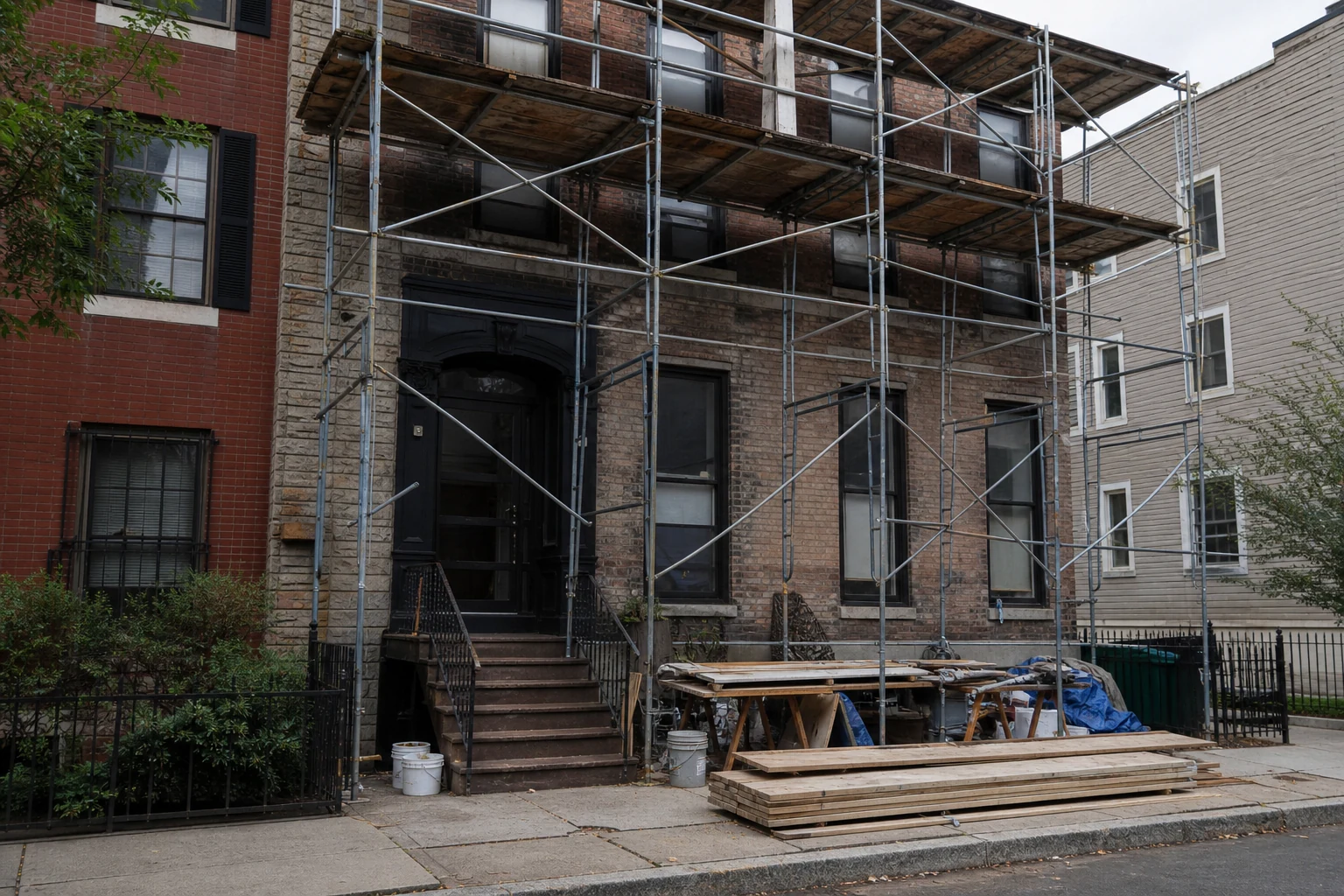
Hard money is a tool. Used with the right lender and the right deal structure, it moves fast enough to capture opportunities that conventional financing cannot reach. The cost is real. The risk is real.
HardMoneySearch forwards your inquiry to lenders in its network. We do not guarantee a response, placement, or specific lender match. Contact multiple lenders independently to compare terms.
Request lender information