Lincoln Lending Group
Tampa, FL
bridgecommercialdscrfix flip
- Trust Label
- Verified Business
- Reviews
- 3.8 composite
- States
- FL
- Close Time
- Ask lender
Tampa, FL
Tampa, FL
Tampa, FL
Tampa, FL
Tampa, FL
Tampa, FL
Tampa, FL
Tampa, FL
Tampa, FL
Tampa, FL
Tampa, FL
Tampa, FL
Tampa, FL
Tampa, FL
Tampa, FL
Tampa, FL
Tampa, FL
Tampa, FL
Tampa, FL
Tampa, FL
Zillow's April 2026 Tampa Home Value Index sits near $376,530, down roughly 3.1% year-over-year (Zillow). Redfin's May 2026 median sale price lands near $443,000 (Redfin). That is a $66,000 spread between two credible sources measuring the same market in the same month. Realtor.com's May 2026 median listing price near $464,000 widens it further.
Lenders cannot resolve that spread with a single comparable sale. They weight recent closed transactions heavily and treat list-price data with skepticism. Investors who walk in with a single-source ARV will face pushback.
Tampa is not one market. Hillsborough, Pinellas, and Pasco counties operate with different price floors, flood exposure profiles, and absorption rates. A lender underwriting a Seminole Heights flip works from entirely different assumptions than one funding a New Port Richey duplex. Citywide averages obscure that variation.
Fix-and-flip investors targeting single-family homes represent the largest share of hard money borrowers across Tampa Bay. Redfin's May 2026 data shows a median 41 days on market and a sale-to-list ratio near 96.7% (Redfin). Those figures give resale-timing assumptions a measurable anchor. A deal modeled on a faster exit erodes quickly when the property sits longer than projected.
Rental investors make up a distinct second borrower type. They target duplexes, triplexes, and small multifamily properties across the three-county metro. Hard money serves as a bridge here—acquisition and stabilization financing before transitioning to a DSCR or conventional loan. Tampa REIA members and active investors in the area consistently report that hold-period length and rent-to-debt-service ratios determine whether the bridge position is viable, not just the purchase price.
First-time investors represent a third, smaller segment. They use hard money when a property moves too fast for conventional financing or fails condition requirements that bank loans impose. Lenders typically apply tighter leverage and more scrutiny to exit strategy when experience is limited.
Submarket selection shapes how each borrower type is evaluated. An investor targeting South Tampa faces different buyer pool depth and price sensitivity than one working a Pasco County value-add deal. Lenders treat neighborhood-level exit assumptions, not metro averages, as the basis for reviewing deal viability. Investors who understand that distinction before approaching a lender submit stronger packages.
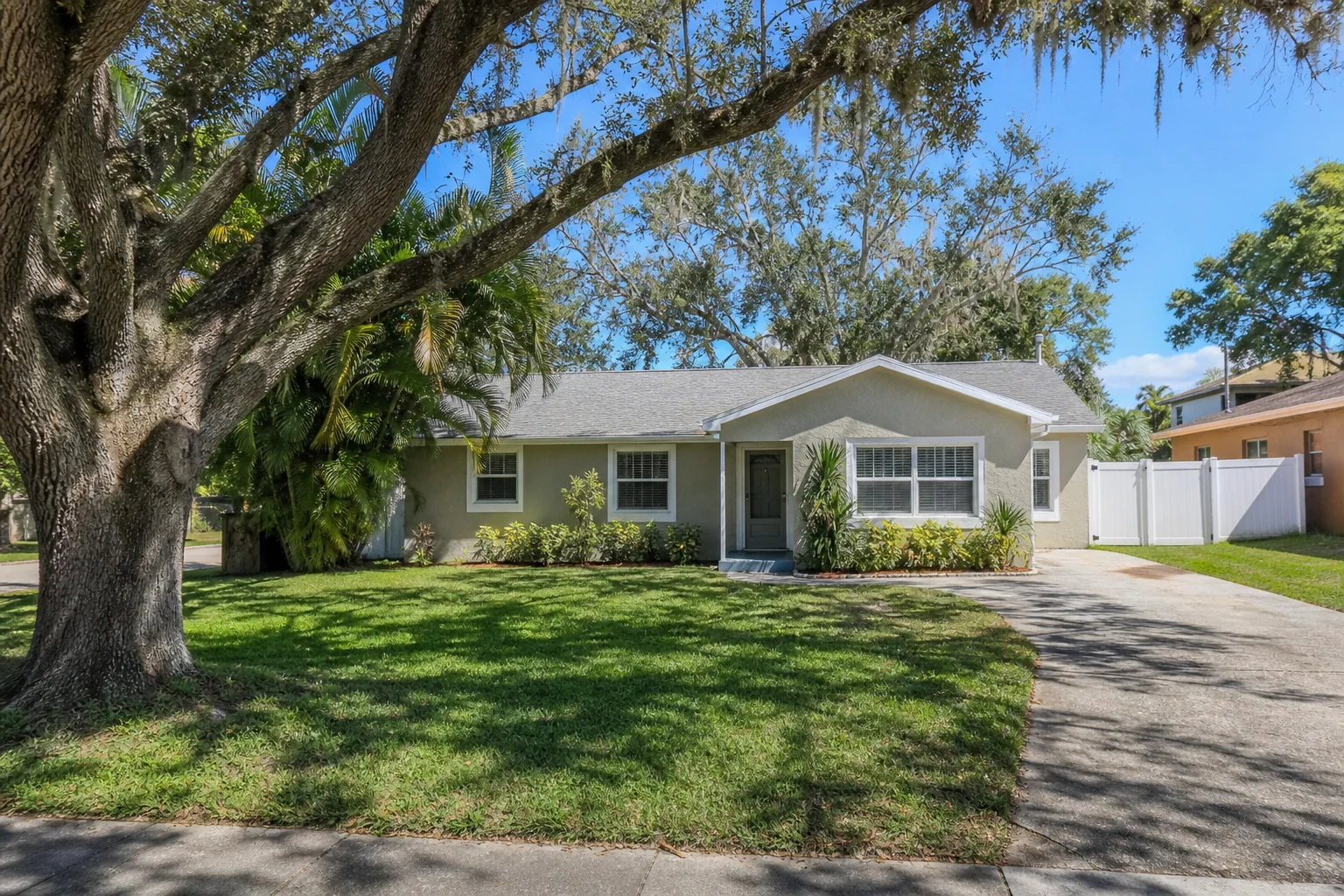
ARV confidence is the central challenge in Tampa's 2026 market. The spread between Zillow's index and Redfin's median sale price exceeds $60,000. A lender cannot resolve that gap with one comparable sale. Expect careful lenders to pull closed transactions at the zip code level, weight the most recent 90 days heavily, and discount any ARV built on list-price data.
Flood zone designation is a hard underwriting variable in Tampa Bay, not a footnote. Properties in FEMA Special Flood Hazard Areas require flood insurance, which raises carrying costs during renovation and affects buyer financing options at resale. Lenders may reduce LTV or require larger reserves when flood exposure adds material cost to the hold period, particularly in coastal Hillsborough and Pinellas areas.
Resale timing is a second lender concern with real math behind it. Realtor.com's May 2026 data shows a median time on market near 63 days (Realtor.com)—roughly 22 days longer than Redfin's closed-sale figure. A borrower planning a 90-day exit should confirm that loan terms and extension options realistically cover the full timeline including renovation.
Small multifamily deals require a different underwriting lens entirely. For duplexes and triplexes in Hillsborough or Pinellas, lenders review rent rolls, debt service coverage, reserves, and a realistic stabilization timeline alongside ARV. Exit strategy—whether refinance into a DSCR product or outright sale—shapes the loan structure from the first conversation.
Rates, points, loan-to-value limits, ARV limits, fees, and days-to-close are informational ranges only when sourced. They are not guarantees, quotes, commitments to lend, or financial advice. Actual terms vary by lender, borrower qualifications, property type, leverage, location, and underwriting review.
Hard money pricing in Tampa breaks into three components borrowers should compare separately: the interest rate on the loan, origination points paid at closing, and additional fees such as draw fees, extension fees, or prepayment penalties. Evaluating only the rate produces an incomplete cost picture.
Tampa lenders price within the national band for asset-based lending, but submarket conditions, requested leverage, and borrower experience all move the figure within that range. A first-time investor requesting high LTV on a coastal Pinellas property will not price the same as an experienced borrower on a stabilized Hillsborough duplex.
Loan terms in Tampa hard money deals typically run six to twenty-four months. Shorter terms are common on fix-and-flip structures. Longer terms suit bridge financing ahead of a DSCR refinance. With Realtor.com showing a 63-day median time on market, a borrower planning a 90-day resale should verify that their term and any extension options cover renovation time plus that full resale window. Request a complete fee schedule from every lender before comparing total loan cost.
Florida does not maintain a single hard money license covering every investor loan. Whether a lender requires a Florida mortgage license under Chapter 494 depends on loan structure, borrower type, and how loan purpose is documented. That complexity makes independent verification essential, not optional.
The Florida Office of Financial Regulation is the state's primary regulator for mortgage-related activity. Search licensee records and confirm a company's current standing at flofr.gov before any conversation about terms begins. A lender that does not appear in OFR records should be able to explain why before you proceed.
For lenders operating under NMLS oversight, NMLS Consumer Access provides a direct lookup by company name, individual name, or NMLS ID. Search current license status, state authorizations, and any disclosed regulatory actions at nmlsconsumeraccess.org. Use it for every lender you contact, not just unfamiliar ones.
Business-purpose investor loans on residential property can fall outside Florida's consumer mortgage licensing requirements. That does not mean those lenders are unregulated across the board. A lender operating lawfully without an NMLS record should still explain its legal basis for lending in Florida clearly and specifically.
Ask every lender directly: what license or exemption covers your Florida loans? Verify the answer against OFR records or NMLS Consumer Access. A lender that cannot answer that question clearly is worth removing from your list before you spend time on underwriting discussions.
Yes. Flood zone designation is a material underwriting variable, not a side condition. A property in a FEMA Special Flood Hazard Area requires flood insurance, which raises monthly carrying costs during renovation and affects buyer financing options at resale.
For fix-and-flip loans, higher insurance costs compress projected profit margins across the full hold period. Some lenders respond by reducing LTV or requiring larger cash reserves, particularly in coastal Hillsborough and Pinellas areas where FEMA flood map exposure is most concentrated.
For small multifamily exits, lenders may stress the rent roll against a higher insurance line item before approving the loan amount. A property that pencils at standard insurance rates may not meet DSCR thresholds once flood coverage is added.
Confirm the property's flood zone designation through FEMA's Flood Map Service Center at msc.fema.gov before approaching a lender. Pull an actual insurance quote and include it in your deal summary. Presenting confirmed insurance costs alongside your ARV signals preparation and gives the lender real numbers to underwrite against rather than assumptions.
Tampa hard money lenders do not underwrite the metro as one market. Hillsborough, Pinellas, and Pasco counties each carry different price levels, days-on-market patterns, flood exposures, and buyer pool depth. A lender reviewing a Seminole Heights single-family home works from different comps and exit assumptions than one evaluating a Clearwater duplex or a New Port Richey rental.
Pasco County properties often attract investors targeting lower entry prices with longer hold periods before resale or stabilization. That longer hold period changes how a lender models both carrying costs and the equity cushion needed to absorb delay. Pinellas properties may carry higher flood exposure costs that reduce net proceeds. Older Hillsborough neighborhoods can vary block by block in ways that make zip code-level comps unreliable.
Lenders who underwrite carefully pull comparable sales at the zip code level, not the citywide level. A borrower presenting metro-wide averages as ARV support will face tighter leverage than one who provides closed sales within a tight geographic radius of the subject property.
When preparing a loan package, include comparable sales from the past 90 days within the same zip code or adjacent streets. That specificity reduces underwriting uncertainty and gives the lender less reason to apply a conservative LTV adjustment.
Start with a written scope of work and a contractor bid. Lenders evaluate rehab budgets alongside the ARV, and a vague renovation estimate weakens confidence in the exit price regardless of how strong the comps look.
Pair that with closed comparable sales from the past 90 days pulled from MLS data or a licensed agent, within a tight radius of the subject property. Given the significant spread between Zillow, Redfin, and Realtor.com benchmarks in 2026, lenders will scrutinize ARV support more carefully than during a rising-price cycle.
Prepare a one-page deal summary showing purchase price, estimated rehab cost, projected ARV, and the planned exit—resale or refinance into a DSCR loan. For rental exits, include a current or projected rent roll and confirm flood zone status before the first lender conversation. Confirm flood insurance costs are reflected in your numbers. Lenders move faster on packages that eliminate the back-and-forth on basics and show the exit math before underwriting begins.
No. HardMoneySearch.com is an informational directory, not a lender, broker, underwriter, or loan approval service. The site is meant to help real estate investors understand common hard money lending terms, compare publicly available lender information, and find verification resources. It does not recommend any lender or decide whether a loan is suitable for your situation. Before entering any loan agreement, review written terms carefully, ask the lender direct questions about licensing and fees, and consult qualified legal, tax, or financial professionals when needed.
An NMLS ID is an identifier connected to the Nationwide Multistate Licensing System, which tracks many mortgage companies and loan professionals. Some hard money and private money lenders display an NMLS ID, especially when they make loans that fall under mortgage licensing rules. Business-purpose investment-property lending is not regulated the same way in every state, so an absent NMLS number is not automatically a red flag. When an NMLS ID is available, use NMLS Consumer Access to confirm the company name and license status. When it is not available, verify the lender through its state regulator where applicable, business registration, reviews, written terms, and direct questions to the lender.
No. Any rates, points, LTV limits, ARV limits, fees, or closing timelines shown on HardMoneySearch.com are informational only when sourced. They are not quotes, guarantees, commitments to lend, or financial advice. Actual loan terms vary by lender, borrower qualifications, property type, leverage, location, documentation, valuation, title, and underwriting review. A borrower comparing lenders should request written terms, ask which fees are due upfront, confirm whether rates or points can change before closing, and compare total cost rather than relying only on a headline rate. Verify lender licensing, written terms, and any state-specific requirements before relying on a quote or proposal.
Many hard money lenders offer fix-and-flip financing, but qualification depends on the borrower, the property, and the lender's underwriting rules. A lender may review the purchase price, rehab budget, estimated after-repair value, borrower experience, liquidity, credit profile, contractor plan, timeline, and exit strategy. Ask how draws are released, whether inspections are required, how interest is calculated, and what happens if the project takes longer than expected. Hard money can be useful for some investment projects, but it is typically more expensive than conventional financing and should be reviewed carefully before signing. Verify lender licensing, written terms, and any state-specific requirements before relying on a quote or proposal.
Start by confirming that the company has a professional website, a reachable phone number, a physical or service-area presence, and consistent business information across public sources. If the lender lists an NMLS ID or state license, verify it through NMLS Consumer Access or the relevant state regulator. In states where business-purpose investor lending does not generally require a mortgage license, ask the lender directly what authority it operates under and whether it brokers loans or lends its own capital. Review Google feedback, written loan terms, fees, draw schedules, default provisions, and payoff requirements before moving forward.
For Tampa borrowers, the practical next step is to confirm the property details, timeline, exit plan, and documentation before comparing lender conversations.
Additional resources: Tampa providers, provider directory, comparison guide.
HardMoneySearch forwards your inquiry to lenders in its network. We do not guarantee a response, placement, or specific lender match. Contact multiple lenders independently to compare terms.
Request lender information