Fix and Flip Loans in Miami: How Real Estate Investors Can Compare Lenders
July 6, 2026
The first mistake in Miami is treating the fastest lender as the safest lender. Speed helps only when the collateral, cost stack, and exit plan still hold up under pressure.
Here is what borrowers should compare before signing: the lender's process, the real cost of the money, and the failure point that would hurt most if the deal runs long.
Project Fit

Flipping a condo in Wynwood can stall at the title stage if an HOA special assessment surfaces after contract. Active condo litigation, investor-concentration flags, and non-warrantability issues carry the same risk. Lenders whose models were built around single-family suburban markets often have no protocol for any of these scenarios.
Miami's inventory compounds the problem. Wynwood skews toward condos and mixed-use. Little Havana runs duplexes and small multifamily. Brickell and Coconut Grove each carry different ownership structures and buyer-pool assumptions. A lender fluent in one category may decline or misprice another.
Borrowers should confirm the lender underwrites their specific property type before going under contract. Ask directly how the lender handles a special assessment discovered post-contract. Ask whether their condo review includes a non-warrantability check. Those two questions separate lenders who know Miami from those working off a generic checklist.
Purchase and Rehab Budget
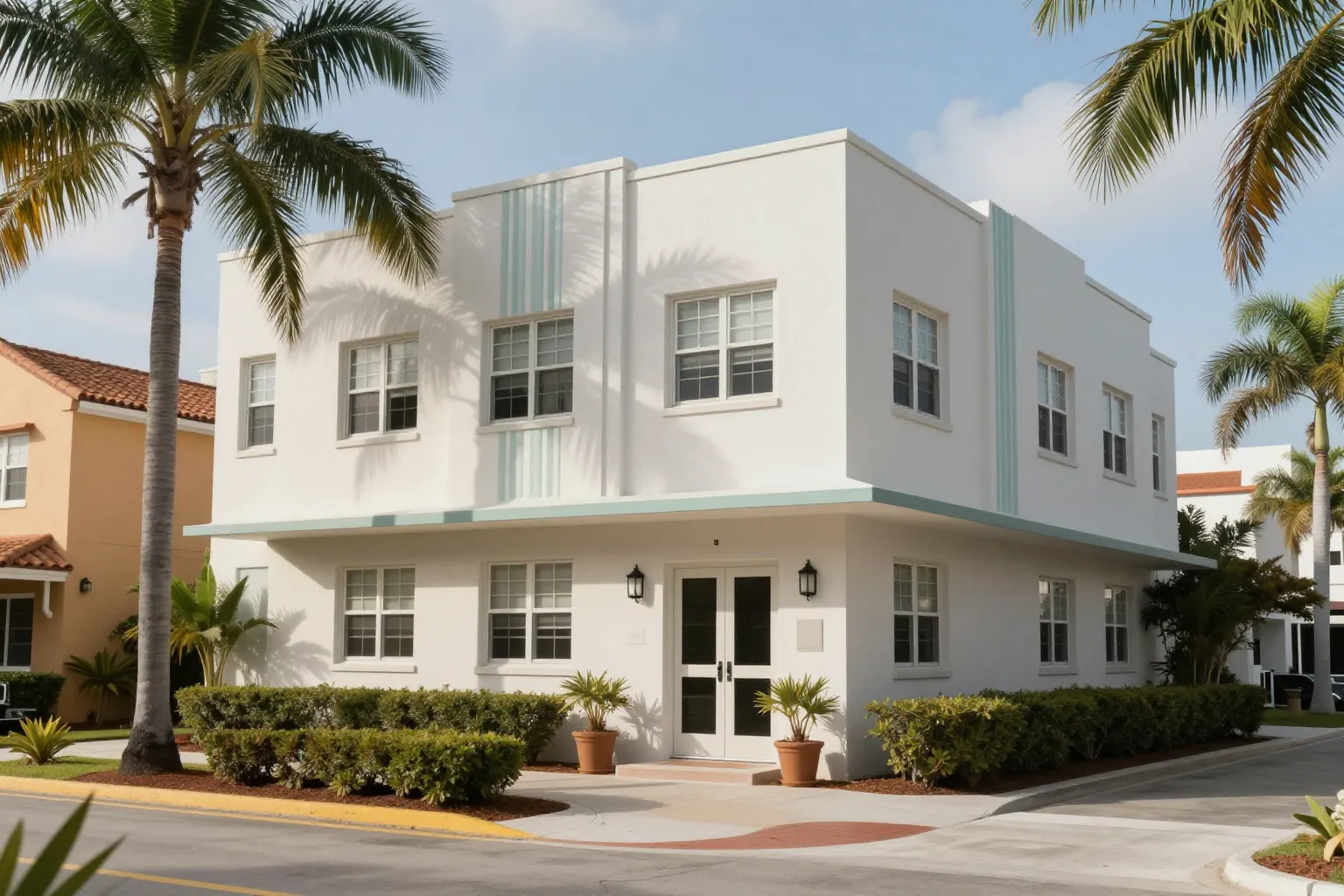
Fix-and-flip lenders in Miami generally underwrite against three figures: purchase price, rehab budget, and ARV. Which figure caps borrower leverage depends on the lender's structure. Borrowers should ask that question directly rather than assume the term sheet headline answers it.
ARV creates a specific complication in Miami's condo market. A unit's after-repair value can shift based on building-level factors — reserve adequacy, pending assessments, litigation exposure — that have nothing to do with renovation quality. A lender whose comparable-sale model is calibrated for single-family rehabs may not price that building-level risk correctly. The mispricing tends to surface as a reduced holdback after contract, not before.
Re-trading the rehab budget mid-deal is one of the most common failure points in fix-and-flip financing. A borrower who secures a verbal commitment on the full rehab budget and then receives a reduced holdback at closing faces a hard choice: close short or walk. The remedy is straightforward — get the full rehab budget commitment in writing before closing, with holdback amount and release conditions specified.
Scope-of-work review practices vary across lenders. Some conduct in-house budget reviews; others use third-party inspectors. Borrowers should confirm whether the lender requires equity injection at each draw stage or funds 100% of approved rehab costs. That distinction materially affects cash flow and is worth resolving before signing a term sheet.
Draws and Inspections

Draw schedules tie rehab funding to completed work confirmed by inspection. A draw that does not fund within a few business days of inspection approval can stall a contractor mid-renovation and compress the resale window. Borrowers should ask each lender specifically how many business days elapse between an approved inspection and funds clearing to the contractor's account.
Miami's permitting environment introduces friction worth raising with any lender upfront. Structural and MEP work often requires sign-off through Miami-Dade Building and Neighborhood Compliance before an inspector can verify completion and release funds. That step adds time a lender's standard inspection workflow may not account for. A delayed release at that phase can push a project past its intended listing window.
Inspection logistics differ meaningfully by lender. Some use in-house staff on a fixed cycle; others contract third-party firms whose scheduling availability fluctuates. Borrowers should ask whether inspections are ordered same-day or on a scheduled rotation, and what the dispute process looks like when a request is contested. Miami's contractor market stays competitive, and a week's delay at a critical phase has real downstream cost.
The number of releases permitted under a loan agreement also shapes cash flow timing. Fewer milestones mean larger release amounts and longer gaps between funding events. More milestones mean tighter verification cycles and more inspection fees. Borrowers should map the funding schedule against their contractor's payment timeline before closing — that alignment matters more than which structure sounds better in the abstract.
Rates, Points, and Fees
After timing, price the whole stack, not just the rate a lender leads with on the first call.
Fix-and-flip lenders in Miami price loans across three primary cost layers: interest rate, origination points, and closing-side fees. All three vary by lender, property type, borrower profile, and deal structure. Direct lender comparison is the only way to establish actual cost for a specific project.
Points are origination fees charged as a percentage of the loan amount and due at closing. They are separate from the interest rate and add directly to total cost of capital. A borrower comparing two Miami lenders on rate alone can easily miss a materially higher point structure on one side of the quote. Total cost — rate plus points plus fees — is the right comparison unit.
Closing-side fees can include processing, underwriting, inspection administration, and wire fees. Each is negotiable in some cases and non-negotiable in others. Borrowers should request a full written fee schedule from every lender before committing. Extension fees deserve particular attention — Miami's permitting timelines and condo resale cycles regularly push projects past their original loan term.
Prepayment language carries its own risk. Some fix-and-flip lenders earn minimum interest regardless of when the loan pays off. A project that closes in four months may still carry the interest cost of a longer term if the note requires it. That clause is worth reading before signing.
Licensing and Verification
Keep legal verification in its own lane: important, source-dependent, and not something to bluff through because a closing is moving fast.
The pattern is the warning: the deal can look fine on paper while the borrower-side math is already breaking. Licensing rules for business-purpose investor loans in Florida can depend on the lender, borrower, property use, and transaction structure. Use NMLS Consumer Access when a lender provides an NMLS number, check the relevant state regulator for consumer-mortgage licensing context, and ask the lender to explain which entity is making the loan. For a specific Miami transaction, confirm the licensing position with qualified counsel or the regulator before signing.
Ask any lender how they classify the loan, which entity is funding it, and whether that entity holds the applicable Florida credentials. A lender that answers those questions clearly is demonstrating basic operational transparency. One that deflects is withholding information borrowers need before commitment.
Exit Plan
A fix-and-flip exit in Miami depends on the property clearing buyer financing at resale. A condo that could not support conventional buyer financing when the borrower purchased may face the same qualification wall when a retail buyer applies. Borrowers should confirm exit viability before acquisition, not after renovation. Borrowers pursuing a refinance exit should verify the lender accepts that path and confirm what documentation is required at payoff. Establish that before signing — not during the final week of the loan term. Carrying costs compound fast when an exit stalls. For additional context on finding Miami providers, see the Miami hard money lender directory, the full provider directory, and the lender comparison guide.
One more comparison borrowers should make before choosing a Miami bridge lender: ask each lender to walk through the same downside case. Assume the appraisal comes in lower than expected, the first draw is delayed by a week, and the refinance lender asks for another round of documentation. A useful lender can explain what happens to your rate, reserves, extension options, and payoff timing in that scenario. A weak lender changes the subject and points back to the headline rate. That's not a discount; that's a warning.