Bridge Loans in Houston: When They Make Sense and How to Find a Lender
June 24, 2026
Texas's lack of a general mortgage license requirement for business-purpose investor loans means Houston borrowers face a lender landscape with no state-enforced credential floor to screen against. That regulatory gap does not make bridge lending here unusable. It makes borrower-side verification non-optional.
Houston's investment market spans single-family rentals, duplex conversions, multi-unit apartment buildings, and commercial mixed-use assets across submarkets with materially different pricing, absorption rates, and permitting timelines. A bridge loan structured for one asset type in one neighborhood may be entirely wrong for another two miles away.
This guide covers how bridge lenders evaluate collateral, structure pricing, and define exit requirements in Houston. Each section is written for borrowers who are comparing specific lenders on a specific deal, not for borrowers seeking general market orientation. Assumptions that held in other markets should be tested here before they inform a financing decision.
Bridge Loan Use Cases
Houston bridge financing applies across five investor scenarios, each with a distinct structure and repayment trigger. Understanding those differences prevents borrowers from approaching the wrong lender or misreading a term sheet.
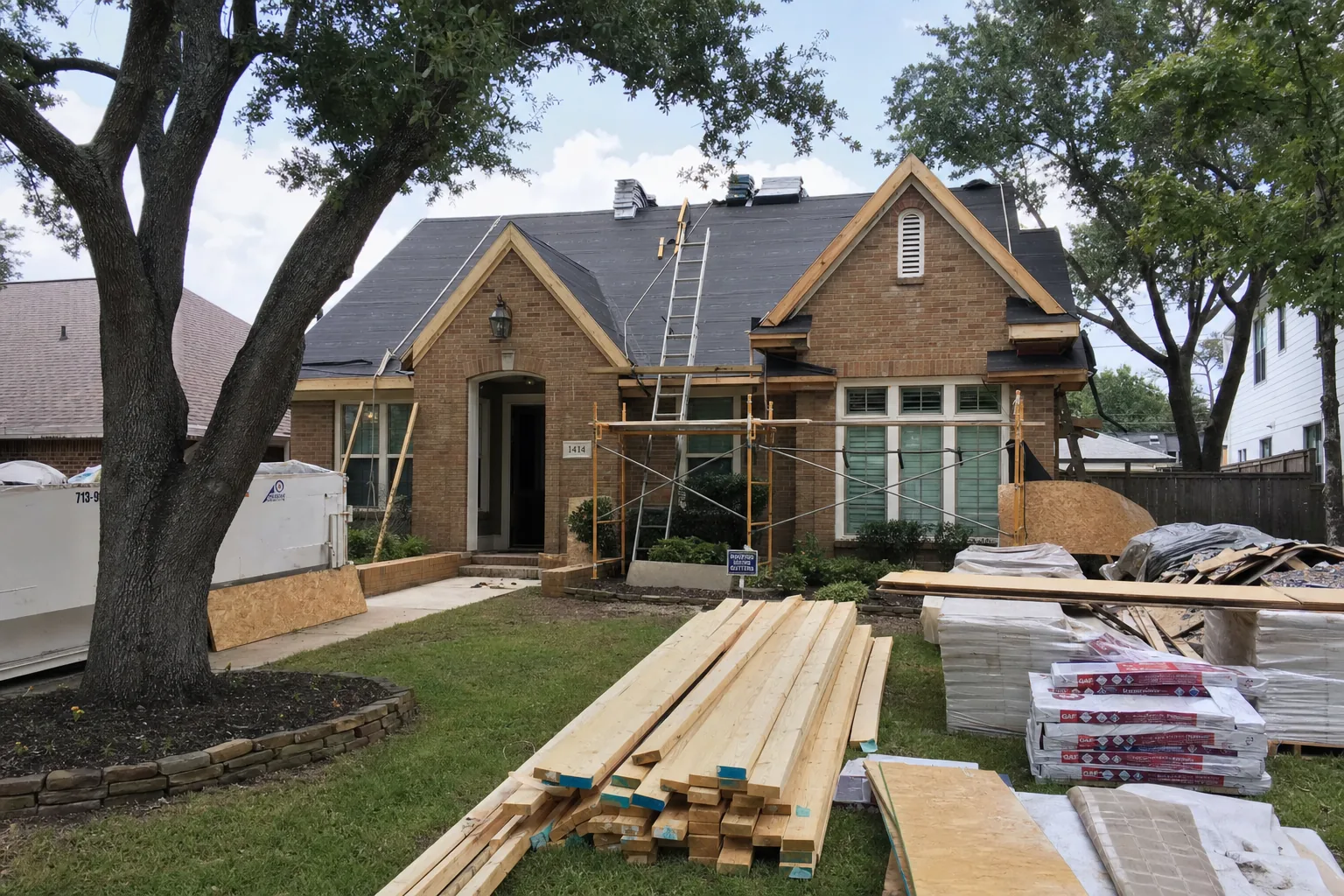
Fix-and-flip loans are repaid through property sale after renovation. Acquisition-plus-renovation loans bundle purchase and rehab into one instrument, with draws released against a construction budget. Ground-up construction loans fund new builds and typically carry stricter draw inspection requirements than rehab deals. Rental portfolio holds use bridge financing to acquire or season an asset before transitioning to long-term debt. BRRRR-to-DSCR transitions bridge an acquisition through renovation and stabilization until a cash-out refinance qualifies the property under debt-service coverage ratios.
Property type determines which scenario applies. An SFR acquisition before a DSCR refinance is not structured like a ground-up build. Lenders who specialize in one scenario may underwrite another poorly.
Out-of-area investors targeting Houston short-term rentals face additional diligence requirements. Do not assume bridge loan suitability for STR acquisitions. Verify local regulations independently and build rental income projections before treating STR revenue as a repayment basis.
Collateral and Timeline
Houston bridge lenders evaluate collateral differently depending on asset type. Single-family houses, duplexes, multi-unit rentals, and commercial or mixed-use properties each carry different assumptions about income potential, exit options, and valuation complexity. Confirm early which property category a lender actively underwrites on completed deals, not just which categories appear on a marketing page.
Leverage calculations introduce a second layer of variability. Some lenders measure loan-to-value against purchase price. Others apply it against current as-is value, a stated rehab budget, or after-repair value. The same loan amount can produce meaningfully different leverage figures depending on which benchmark the lender uses. Ask directly which benchmark applies and whether it changes once renovation draws begin.
Draw structure is a more useful comparison point than closing speed claims. Rehab-budget underwriting, inspection requirements between disbursements, and draw release timing all differ across lenders. A lender who releases draws quickly without inspection may expose borrowers to budget disputes later. One who requires third-party inspection before each disbursement adds time but reduces that risk. Neither approach is universally better — what matters is whether the structure matches your project's timeline and contractor payment schedule.
Days-to-close figures are lender-stated representations. Actual closing speed depends on how quickly you submit complete documentation, whether title carries any clouds or open issues, how the lender orders and reviews its valuation, and whether draw process setup occurs before or after closing. A Houston address does not guarantee familiarity with a specific submarket's comparable sales or rehab cost conditions. A lender based elsewhere may have stronger local comp data than one with a local office. Ask how the lender sources its valuations in the specific neighborhood where the property sits.
Rates, Points, and Fees
Bridge loan pricing is not a single number. Total cost on a Houston deal includes the annual interest rate, origination points paid at closing, draw fees on each rehab disbursement, extension fees if the project runs past maturity, and any interest reserve the lender requires upfront. Comparing two lenders on rate alone misses the majority of what determines actual cost.
Origination points are charged as a percentage of the loan amount and due at closing. On a bridge loan covering both acquisition and rehab, points layer on top of interest that accrues throughout the hold period. A low stated rate paired with high origination points can produce a higher total cost than a higher rate with minimal points, depending on hold length. Model the full cost across your projected timeline before treating any single number as the deciding factor.
Draw fees apply each time a disbursement is released against the rehab budget. These are sometimes flat per draw, sometimes percentage-based, and sometimes waived entirely. The structure matters more on projects with frequent smaller draws than on projects with a few large disbursements. Ask for the draw fee schedule in writing before closing.
Extension fees activate when a borrower cannot exit the loan before the maturity date. Houston rehab timelines shift due to permitting delays, contractor availability, and resale market conditions. Request extension terms in writing before closing. Understand whether extension is automatic, requires lender approval, or is capped at a fixed number of renewals.
Prepayment terms also vary across lenders. Some require a minimum interest period regardless of when you pay off. On a fast flip with an early sale, that minimum period determines how much interest you owe beyond the actual hold. Get the prepayment language in writing and calculate its cost against your projected sale timeline before signing.
Ask every lender for a complete fee schedule. Then model total cost across your projected hold period and a realistic extension scenario.
Payoff and Exit Strategy
Bridge loans are short-term instruments. Houston lenders expect a defined payoff path before the loan closes, and exit strategy is reviewed during underwriting as a substantive criterion, not a formality.
The three most common exits are property sale after rehab, cash-out refinance into a DSCR loan, and stabilization followed by conventional or portfolio financing. Each carries different timing, qualification, and market risk. A fix-and-flip exit depends on resale absorption in the specific submarket. A DSCR refinance exit depends on the property's actual post-renovation rent and the refinancing lender's debt-service coverage threshold at the time of application.
Do not assume DSCR refinance eligibility before renovation is complete. Rent projections made before a rehab closes may not reflect actual market rents after the work finishes. If the property doesn't achieve the projected rent or the refinancing lender tightens its coverage requirements, the exit timeline extends. That extension triggers fees or, in some cases, default provisions.
Before signing, read the maturity date, extension option language, and any prepayment minimum in full. Know whether the lender offers extensions, how many, at what cost, and under what conditions. Those terms define your downside exposure if the primary exit is delayed.
Ask the lender directly what happens if the property does not sell or does not appraise for refinance before maturity. A lender who gives a clear, specific answer — in writing — has demonstrated more about their operating practice than any marketing language will. A lender who deflects that question has also given you an answer.
Document every commitment the lender makes about exit flexibility before you sign the term sheet.

Licensing and Verification
Texas does not require a general mortgage license for business-purpose investor loans on non-owner-occupied properties. That gap is confirmed by the Texas Department of Savings and Mortgage Lending's own framework at sml.texas.gov, which concentrates residential licensing requirements on loans made for personal, family, or household use. Bridge lenders operating in Houston's investor market fall outside that definition and face no state-enforced credential floor.
That absence places verification responsibility entirely on the borrower. Start with NMLS Consumer Access. If a lender provides an NMLS number, search it directly at the NMLS Consumer Access portal to confirm the entity name, license type, and states of authorization. Some Houston-area lenders carry voluntary residential licenses or hold them because they also originate owner-occupied products. Others operate with no NMLS presence. Neither condition alone determines competence, but confirmed registry data gives you a documented, verifiable starting point.
Lenders without NMLS numbers require a different verification sequence. Request the entity's legal business name, formation state, and principal names. Verify the business registration through the Texas Secretary of State's public records. Ask for references from Houston-area borrowers on completed transactions — not testimonials published on the lender's own website. Ask the lender which Texas regulations it believes govern its product and how it handles borrower disputes.
Lender marketing claims — days to close, approval rates, minimum credit thresholds, maximum LTV limits — are lender-stated representations until independently verified. Verification means checking a specific claim through a source other than the lender making it.
HardMoneySearch is an informational directory and does not endorse any lender appearing in these pages. Verify all lender credentials via NMLS Consumer Access before entering any loan agreement.
When to Walk Away
Walk away from any Houston lender who demands a commitment before you have reviewed the complete fee schedule in writing. That deadline is artificial. Lenders with sound deals do not require it.
A lender who cannot produce a written term sheet covering origination points, draw fees, extension terms, and default provisions is not operationally ready to close your deal. Verbal commitments on those items are unenforceable and meaningless.
Walk away from any lender who cannot explain, specifically, how they handle draw inspections, ARV disputes, and maturity extensions. Vague answers to direct operational questions are the answer.
Additional resources: Houston providers, provider directory, comparison guide, https://www.nmlsconsumeraccess.org/.